Wednesday, March 7, 2012

Project GRAD LA ~ Ford Roosevelt


Volunteers from Project GRAD (Graduation Really Achieves Dreams) Los Angeles fan out into a San Fernando Valley neighborhood, going door to door. They look like they are canvassing the community for an election, but instead of political flyers they carry “graduation contracts.” With a list of student names, they know the signatures they seek to obtain before the sun goes down – incoming sixth grade students to one of four middle schools that comprise a “feeder pattern” into San Fernando High School.

Leading the “Walk for Success” is Ford Roosevelt, President and Chief Executive Officer of Project GRAD Los Angeles. Among the volunteers are former graduates of the program, staff from Project GRAD headquarters in North Hollywood, and some pretty impressive funders that support the organization’s work–Michael Eisner included.
 

Former Project GRAD Scholars now on staff. Clockwise from top right:  Julisa Chavez, Maricela Gallegos, Alejandra Fregozo, Eliana Mendoza, Christina Gutierrez, Natalie Frausto, Yasmin Soltero, Jose Alcala and Bulmaro Huante

They can be very persuasive in getting students to sign the Agreement that states that they will stay in school and graduate from high school having completed a college-prep curriculum. Parents must also sign the contract and agree to support Project GRAD rules, which state that homework is completed on time, school attended every day, and classroom rules are obeyed. Mutual respect among students and teachers is also required. 

“We believe that a college education is a right, not a privilege,” explains Ford. 


For those students that participate, graduate from high school and maintain at least a 3.0 grade point average, the reward can be a scholarship to a four-year college. In a time when budget cuts to education are epidemic, this commitment by public and private sector partners, teachers and principals, parents and families, and community-based non-profits is an important step in increasing college graduation rates for first-generation students from low-income backgrounds.


Shan: How does the model for Project GRAD work?

Ford: The Project GRAD model is based on four inter-connected strategies for increasing student performance that are precursors to college: Academic Enrichment; Parent Engagement; College Awareness, Readiness, and Retention; and Community Partnerships.


Project GRAD works directly with students and parents in the North East San Fernando Valley to raise aspirations and help prepare students to graduate from high school and college. For us, that work begins as early as possible and involves providing wrap-around services as students move throughout the educational pipeline. These services include academic enrichment, tutoring, summer programs, a college readiness curriculum, and parent programs.


Morning sign in table at the 2011 Walk For Success.  About 1000 families from the community came to a community fair to learn about college and how to access resources in schools to be better prepared for college.  Project GRAD Los Angeles High School Site Coordinator, Yasmin Soltero is in foreground on the right.


Shan: What are some of the innovative ways Project GRAD keeps students engaged on a regular basis?

Ford: One example, Project GRAD uses to get students on board early is an intensive 4-week summer institute for 7th and 8th graders focused on algebra and robotics. We know that algebra proficiency is a key indicator for college success.

After the first Project GRAD Los Angeles Algebra and Robotics Summer Institute, student readiness for Algebra was tested and every student placed well enough to enter Algebra I (and after one semester, 85% of students earned a “C” or better). According to former LAUSD Superintendent, Roy Romer, failure in algebra “triggers dropouts more than any single subject.”
  
Our robotics programs have nothing to do with whether or not the students we work with are not as smart as students in wealthier communities. It's more a matter of bringing additional learning opportunities to our students that are similar as those in wealthier communities, which are just expected and a common practice. We are trying to level the playing field and create the same opportunities for learning and support as happens within wealthier communities.

Students who do not pass Algebra 1 in the 9th grade, are less likely to graduate from high school, let alone attend college. And for those students who do pass, and go on to college, too many must take remedial math before they are ready for college-level math.


Following the second summer institute, 90% of students after one semester had earned a “C” or better in Algebra I (36% earned an “A”, 33% earned a “B,” and 21% earned a “C.”) The institute includes mornings devoted to learning algebraic concepts, and afternoons applying those concepts to building and programming Lego robots.
 
We continue to support our students, 90% of whom are the first in their family to attend college, through the community college and university level. In collaboration with several higher education partners, Project GRAD is working to create the systemic change necessary to enable more first-generation college students to persist once they make it to college.


Up to 160 students learn through hands-on, real-life applications of algebra to compete each year in the “Robot Olympics” at the conclusion of the 4-week intensive institute.


Project GRAD Los Angeles works with about 14,000 students in four middle schools and four high schools. Presently, 580 Project GRAD Scholars are enrolled in colleges and universities across the country.  Since 2005, 230 Scholars have earned their college degrees.


One of 10 Project GRAD sites across the country, Project GRAD Los Angeles was founded in 1999 with substantial support from The Eisner Foundation and The Ford Foundation.

For more information about Project GRAD Los Angeles and ways to contribute, visit: www.projectgradla.org or call 818-760-4695.


Shän Boggs is a writer and editor living in Los Angeles. Her interests include science, technology, the environment, health, education, multimedia, art, and gourmet cooking. She is the author of a cookbook series for people with food sensitivities.

Monday, February 27, 2012

Invisible Children ~Aaron Gentry Boggs


Weeks before Aaron Gentry Boggs graduated from high school, another student showed a documentary at an assembly by three young southern California filmmakers who had gone to Africa seeking to have a film adventure.  Instead, they had a life-changing experience – capturing on film the heart-wrenching exodus of children in northern Uganda fleeing from the Lord’s Resistant Army (LRA), a guerilla force of Acholi religious extremists that had kidnapped an estimated 22,000 children and forced them into military service to fight against their own families. 

The filmmakers, Jason Russell, Bobby Bailey, and Laren Poole, had been so moved by the children they met that fled each night to “safe houses” to avoid kidnapping ordered by LRA rebel leader Joseph Kony, that they set up a non-profit foundation, Invisible Children (IC), to provide aid to children and displaced families.  They were taking volunteers.  Dangerous or not, Aaron wanted to volunteer and help in whatever way he could.


Aaron with friend, Tony, one of the Invisible Children.
Photos compliments of LIA and IC volunteers and staff.

 “Immediately after I saw the documentary, I called my friend Erin Kelly,” Aaron recalls. “I had heard she had a cousin in Uganda.  My friend said her cousin would be visiting California and I could talk to her about any questions I had.”
 
The cousin arrived in California.  Christina Jordan, a linguist, had founded art foundation Life In Africa (LIA) after one of her Ugandan employees had his children kidnapped by the LRA.  Christina had personally gone into the jungle to negotiate their release.  Deeply affected by the experience, she returned to Kampala determined to do something.  Her idea was to develop art co-ops to “create art not war” and she obtained sponsorship by the founder of E-Bay to sell co-op art on the Internet.

Aaron met with Christina.  She put his mind at ease about any serious dangers to volunteers.  She was also willing to be Aaron’s sponsor in Uganda, as well as Megan Kelly’s sponsor (Erin Kelly’s sister), who had decided she wanted to volunteer. The final piece fell into place when Aaron’s mom, who hadn’t figured out what she wanted to get Aaron as a high school graduation present, gave him a roundtrip ticket to Uganda.


There were no direct flights from Los Angeles to Kampala.  Megan and Aaron had to hop-scotch continents, from Washington, D.C. to Italy, and then Italy to Ethiopia to catch a flight to Kampala, Uganda.  It took days to get there. 

At the Entebbe Airport they were met by two Life In Africa representatives, Peter and Gilbert, who then drove them to LIA headquarters.  After they recovered from jet-lag, Megan and Aaron undertook an intensive LIA orientation to prepare them to work with artisans and teach art classes to children.  Then they were off to Gulu in northern Uganda where the Invisible Children stayed. 

Megan Kelly and Aaron preparing to go to Gulu.
  “We rented a mini van and one of the other LIA organizers, Grace, went up with us.  It took four or five hours…  We crossed the Nile.  It was beautiful.  Heavy rapids.  Monkeys everywhere.  We also saw baboons,” Aaron shares.

 
Along the way, they gave a lift to two young government soldiers with huge guns that had rounds of clips.  “They dropped one of the guns.  I flinched.  I was sure it would go off.  These guys were ready for WWIII.”

They stayed at a compound with the Invisible Children and then moved into a hostel for IC volunteers, where Aaron would see Bobbie Bailey and Laren Poole, who were deeply involved in film work.  By day Aaron taught LIA art classes and by night hung out with other IC volunteers.  At night they were grateful for the safe house, as they heard LRA gunfire in the jungle.  Michael, David and Tony – Aaron’s closest friends  -- were, themselves, Invisible Children who had had family members killed by the LRA.


Because of Aaron’s high school computer skills, he transitioned from teaching Life In Africa art classes to kids to teaching typing and basic computer skills to adults for the Invisible Children organization using low energy computers. 

“There were rolling black outs every week. In Gulu the power would be off for a week at a time. You had to haul your own water from a well to the compound in these huge yellow plastic bottles like gas cans. We took sponge baths or cold showers.”

Aaron worked for two months as a volunteer in Uganda, where he celebrated his 19th birthday.  “I’m really happy that I did this, that I worked in Uganda and got to know people. That it wasn’t a vacation. I didn’t stay in a fancy hotel.”

“I think it’s important to help people make their lives better,” says Aaron.  “When I was there, there were no public schools - only private schools, so only families with money could afford education. Invisible Children is helping to support children with scholarships to get an education. Life In Africa is trying to help build infra-structure, putting money back into the community to build houses, schools, provide electricity – through art. And there are other groups that are trying to help also.”


Teaching art classes.

Working with artisans from the cooperative.


Artisans making peace tiles for sale through the Life In Africa website.


As of this writing, Joseph Kony, the leader of the Lord’s Resistant Army, is still at large. Invisible Children has a real-time network - the LRA Crisis Tracker – that sends out warnings in the areas where LRA is believed to be active. For more information, please visit: www.invisiblechildren.com

For more information about Life In Africa Uganda and Life In Africa USA foundations, 
please visit: http://lifeinafrica2.com

update on 3/8/12


After this blog posted, these sites featured the filmmakers of Invisible Children and their worldwide campaign focus on the creation of Joseph Kony Day - April 20, 2012 - to demand policymakers focus on the capture of Joseph Kony as a top priority.

To see the Kony 2012 Documentary and learn more, please visit:

http://media.theage.com.au/system/ipad/kony-2012-documentary-3107430.html


video.pbs.org/video/2208001602
 

Shän Boggs is a writer and editor living in California. Aaron Gentry Boggs is her son.


Saturday, February 11, 2012

The Exploratorium ~ Dennis Bartels


Image © Exploratorium - Palace of Fine Arts
 
When physicist and educator Frank Oppenheimer created The Exploratorium in 1969, little did he know that his highly original prototype would attract over 15 million visitors at the Palace of Fine Arts in San Francisco, generate exhibits that would be played with and enjoyed by more than 180 million people worldwide, and inspire the creation of over 1,000 other experiential museums around the globe.

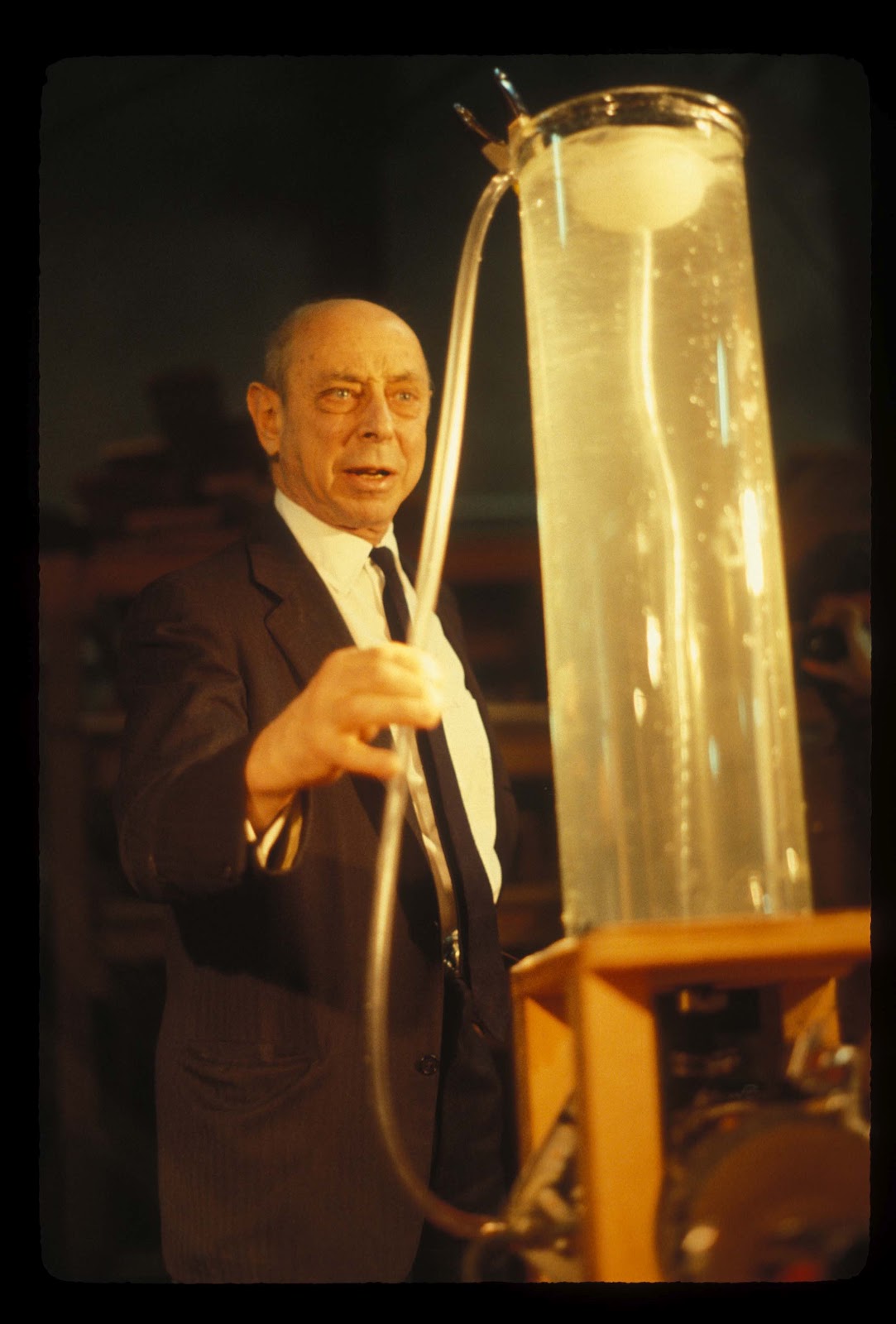
Image © Exploratorium - Dr. Frank Oppenheimer, Founder


At the crossroads of science and art, the legacy of a great vision lives on at The Exploratorium – a museum for people of all ages that provides educational experiences in science, art, and human perception. http://www.exploratorium.edu/

Image © Exploratorium - Dr. Dennis Bartels, Executive Director

Today, Executive Director Dr. Dennis Bartels is leading The Exploratorium into the 21st Century with innovative ideas that will take the museum to the next level in an expansive move to the Piers on San Francisco Bay in 2013.  With a background in teaching and learning, and a focus on improving math and science education, he is fascinated by how we think, feel, and make decisions about the world around us.


Image © Exploratorium - Distorted Room Exhibit
 
Bartels shares that each project is field-tested to assure a high quotient for interactivity and wonder.  It must also be real. Only one idea out of 10 makes it to the ongoing exhibit stage.


Image © Exploratorium - Icy Bodies Exhibit


From playful to perplexing, The Exploratorium exhibits and activities tantalize the senses and tease the brain, challenging how we think and perceive.


Image © Exploratorium - Exhibit developer and physicist Ron Hipschman provides technical expertise for webcasting with streaming video from as far away as the South Pole.  He helped establish the museum’s web presence, making it one of the first 600 websites on the World Wide Web.


Image © Exploratorium - Cyber Lumen Exhibit


Bartels works with researchers, artists, collaborators, and staff to design everything from exhibits to the websites that have over 25,000 pages of content. His vision is to encourage learning by “doing” through hands-on experiences with our environment – for people of all ages.


Image © Exploratorium - Two High School Explainers


Image © Exploratorium - Director of Living Systems Kristina Yu oversees the biology laboratory that includes the Microscope Imaging Station that allows museum visitors to explore living biological samples and also provides high quality imagery to educators.


Shan: How does The Exploratorium introduce scientific concepts to different age groups using science, art, and perception?

Dennis: The Exploratorium is phenomenon-based.  One of my favorite exhibits is Colored Shadows. How can we have different colored shadows? (It really makes you think.) What we discovered is that phenomena are quite universal for all ages. With some of our most fascinating exhibits we have world-renown physicists awed. Physics is the core here. It immediately talks back.


Image © Exploratorium- Colored Shadows Exhibit


Visit The Exploratorium on YouTube:


Image © Exploratorium -The Tactile Dome invites exploration in total darkness by sense of touch.
  
Shan: What are some of the contributions that have been made to The Exploratorium by the Artists-in-Residence Program?

Dennis: Many artists, both those on staff - including MacArthur "Genius" Fellows - and artists-in-residence, have contributed to a meaningful number of exhibits that you see on the floor of the Exploratorium. Artists sometimes work alone and sometimes collaborate with scientists. We invite people to come and play with us. Scientists and artists have a similar approach. They are “expert noticers” of stuff. They come up with genuine inquiries about the world.

Two classic examples: The Tactile Dome, created by the Dean of the Art Department at San Francisco State University, August Coppola, invites you to find your way with touch. And Sun Painting, created by Bob Miller, captures a sunray through a hole in the roof and using mirrors reflects onto a white wall resulting in a beautiful color spectrum. As a scientist the separation of wavelengths is inspiring. For an artist there is amazement at the incredible variety of a star.


Shan: What are some of the innovative online activities offered by the Exploratorium?

Dennis: We were the 600th website on the World Wide Web and one of the first to have “.edu” as part of our url. It’s great what you can experience online without actually visiting The Exploratorium. “What is Evidence: How Do We Know What We Know,” is an Exploratorium website that goes through about 12 ways we look at information. One of my favorite websites is “Ice Stories: Dispatches from Polar Scientists.” We taught a group of scientists how to use video equipment to take with them to the South Pole, so that we could see research in the making.

Image © Exploratorium- McMurdo Sound scientists share research in the making at the South Pole using Exploratorium video equipment.


Image © Exploratorium- After Dark Exhibit for Adults
  
Shan: How will the move to the Piers in 2013 expand upon what the Exploratorium now offers?

Dennis: It allows us to explode – multiply the impact. As an example, there will be a wonderful teaching exhibit. We will finally get to play outdoors with two whole acres. We can use the Bay as our Petrie dish - a story that isn’t told very often. What is more important environmentally, we will have more traffic and can open ourselves up in the evening to adults. Plus, there are so many people that want to play with us – the National Oceanic and Atmospheric Administration, Marine Institute, PIXAR, Stanford University, to name a few. We can now show the cool stuff they are doing.


Seeking the curious.  The Exploratorium has something for everyone, whether you are an educator, parent, artist, scientist, geek, teen, adolescent, or museum professional.


Visit The Exploratorium on YouTube:


Websites & Online Interactive Activities:
From the oceans to space including Science at Burning Man, Cabspotting, Live Deep-Sea Exploration with the E/V Nautilus, as well as Teacher Institutes and workshops, After School Activities, Food Science, Optical Illusions, Sports Science, Color, and much, much more.

Educators should be sure to check out:

*Artists-in-Residence Program
*Osher Fellowship Program  


Events:
If you are lucky enough to live in the area, there are monthly events as Family Investigation Workshops, day camps, films, evening art and science events for adults, and professional development opportunities for educators and others. But for those who cannot visit in person there is the Online Media Series, Science In The City, with intriguing explorations of urban environments, natural and human-made phenomena.

Special thanks to Dennis Bartels, Leslie Patterson and Stacy Martin of The Exploratorium for making this blogspot interview possible.

For general information call (415) 561-0360.


Shän Boggs is a writer and editor living in California. Her interests include science, technology, the environment, health, education, multimedia, art, and gourmet cooking. She is the author of a cookbook series for people with food sensitivities.


Saturday, January 14, 2012

The Art of Ethnic Chinese Dance ~ Luo Yi


Luo Yi in ceremonial costume.

Shan: You have done some interesting work with Guilin Chinese cultural dance. How did you get started as a dancer?

Luo Yi: My father had a musical background and played the erhu, the two stringed bamboo Chinese instrument played with a bow.  His company sponsored a big Chinese Spring Festival every year and I got to observe and at the age of six began to participate in rehearsals, including dance and musical performances.  Early on I was taught the stretching exercises and dance moves.  At 10, I learned to play the accordion.  I was chosen to attend a special school with a traveling college group that focused my studies on dance for six months. Then I spent the next three years performing in schools for assemblies and festivals in Guangxi and Hunnan Provinces not far from my hometown of Guilin.   Later, I received a scholarship to major in Music and Dance at the University for the Arts of Guangxi in Nanning, China. After graduation, I began teaching in schools and colleges for 20 years while also receiving my Masters degree in classical piano, voice, and dance instruction. 


Rehearsing in her studio.


Traditional Tai Chi Fan Dance.


Luo Yi and her sister Luo Li performing with other children.


Playing the two-string erhu at a tea house on the        Li River.

 
Photos compliments of Luo Yi.


Yi traditional costume.


Shan: Can you share some of the details of how you preserve the historic significance of this kind of dance?

Luo Yi: Guilin is in an area of China where many minority cultures live and have maintained their folk dances and costumes.  Almost 97% of the Chinese are of the Han majority.  I studied their traditional dances but mostly the local cultures of my own Yao ancestry and those of the Miao, the Zhuang, the Dong and Yi peoples.  Then later studied the Uygur, Dai, Tibetan and Chinese Korean.  I spent hours and hours designing and making costumes for myself and dance troupes that I have choreographed.  The history of China was of special interest to me and I was especially influenced by ancient classical dances of the Han Dynasty [200 B.C.] and Tang Dynasties [663 A.D.]  


With students in minority dance performance.

5th Century Dance performance.
Luo Yi is preparing a special program for Chinese New Year.  Year of the Dragon begins January 23rd. It is believed to be one of the most auspicious years in the Chinese calendar.
 
Shan: What was your most memorable experience?

Luo Yi: My most memorable moment was in 2003, when I sent some pictures of myself in dance costumes to my new artist friend Thom in America.  He then wanted to come to China to meet me and my family, see me dance, and observe me teaching my students. He came to China twice before my daughter and I came to visit him in America. We have now been married six years.

After only three days in America, I got a call to help choreograph dances for the local Chinese New Year and Spring Festival at the University of Oklahoma, where I make my home with my husband Thom Renbarger. 


More about ancient Chinese costumes.

A fascinating link to ancient Chinese Ethnic Groups with photos of people and their costumes by Chen Haiwen in his "Family Portrait" series of the minority peoples of China: http://www.chinatoday.com/people/china_ethnic_achang.htm

China’s 56 Minority Ethnic groups include the following. 


    Achang Family
    Bai Family
    Blang Family
    Bonan Family
    Bouyei Family
    Dai Family
    Daur Family
    De'ang Family
    Derung Family
    Dong Family
    Dongxiang Family
    Ewenki Family
    Gelao Family
    Han Family
    Hani Family
    Hezhen Family
    Hui Family
    Jing Family
    Jingpo Family


    Jino Family
    Kazak Family
    Kirgiz Family
    Korean Family
    Lahu Family
    Lhoba Family
    Li Family
    Lisu Family
    Manchu Family
    Maonan Family
    Miao Family
    Monba Family
    Mongol Family
    Mulam Family
    Naxi Family
    Nu Family
    Oroqen Family
    Ozbek Family
    Pumi Family


    Qiang Family
    Russian Family
    Salar Family
    She Family
    Sui Family
    Taiwan Family
    Tajik Family
    Tatar Family
    Tibetan Family
    Tu Family
    Tujia Family
    Uygur Family
    Va Family
    Xibe Family
    Yao Family
    Yi Family
    Yugur Family
    Zhuang Family


Shän Boggs is a writer and editor living in California. Her interests include science, technology, the environment, health, education, multimedia, art, and gourmet cooking. She is the author of a cookbook series for people with food sensitivities.

Monday, January 2, 2012

Horses Would Most Like to Whisper to ~ Jim Masterson


Jim travels the world as a physical therapist and bodyworker to some of the world’s top performance horses, from hunter-jumpers to trotters, racehorses to Olympic endurance competitors –
as well as horses that are regarded as beloved family members.


Horse whisperer.

Horse therapist.

A horse’s best friend.

All descriptions that come to mind with Jim Masterson in his very special work with horses.


Photos compliments of Jim Masterson.


To watch the way horses interact with Jim – is pure magic. For the casual observer, the first thing you would notice is how a thousand pound animal goes from a survival response and being on guard to becoming puddy in his hands in a matter of minutes.


 With each expert move Jim applies to a tender or tight muscle, the horse responds with less and less resistance. Eventually, he is able to gain complete cooperation from his charge that allows him to bend and twist a horse into a position that might remind you of a pretzel – for the purpose of stretching important muscles in the poll, neck/shoulder/withers junction, and sacro/lumbar junction. Some horses have even been known to lie down after a good massage and go to sleep. Just like a human.


For horse owners accustomed to a cantankerous, obstinate, or independent personality – the transformation from errant teenager to docile, sweet, cooperative, and adoring being is a sight to see.  Jim has pinpointed different levels of relaxation that include eye blinking, yawning, lip licking, shifting of feet, snorting, showing teeth, neck stretching, and shaking of the head.


Some horses go out of their way to give Jim an affectionate lick or nudge. This cross specie communication is an absolute delight to see.


Jim Masterson may very well be the person horses would most like to whisper to – and say, “thank you.”


SHAN: How does physical therapy for the horse help performance horses reach their goals?
JIM: Horses are similar to people in that they are not perfectly symmetrical. For example, they have a stronger, more predominant side, and a shorter or a longer leg, the same as most people. 
Under the stress of work, this asymmetry can develop into imbalanced muscle tension patterns that can pull the horse’s body out of alignment or eventually lead to lameness. 


Bodywork can help release imbalanced tension patterns that cause the horse discomfort or pain, and impede performance.


SHAN: What changes have you witnessed in this type of horse care since you came on board?
JIM: Interest in massage, bodywork, and “alternative therapies” for horses is booming. I think that certain therapies, such as cranial-sacral and acupuncture, are just as effective, if not more, on horses than on humans.


I think with horses there is less clutter between what’s going on with their body, and their brain or nervous system. They are in the moment.
While you’re working on a horse, he’s not lying there thinking, “this isn’t working,” or “what’s this gonna cost me,” or “if I come home to spaghetti one more time, I’m gonna….” Humans can spend thousands of dollars learning to be “in the moment,” and it can last a few minutes, or seconds at a time. For horses it’s natural. Even more veterinarians are learning and using acupuncture and chiropractic.
 

Masterson seminar in Palo Alto, California.
Jim loves teaching what he knows and has launched a physical therapy certificate program for horse-owners, which is accredited through the National Certification Board for Therapeutic Massage and Bodywork Organization for continuing education units. He travels the globe holding trainings in Ireland, England, Germany, Australia, Canada, and the United States.

 
See Jim in action by going to:
  
For more information about Jim Masterson’s method and his DVD and recently completed book, “BEYOND HORSE MASSAGE: THE MASTERSON METHOD” or his worldwide training schedule, please visit http://www.mastersonmethod.com
and
or call 641-472-1312


Shän Boggs is a writer and editor living in California. Her interests include science, technology, the environment, health, education, multimedia, art, and gourmet cooking.